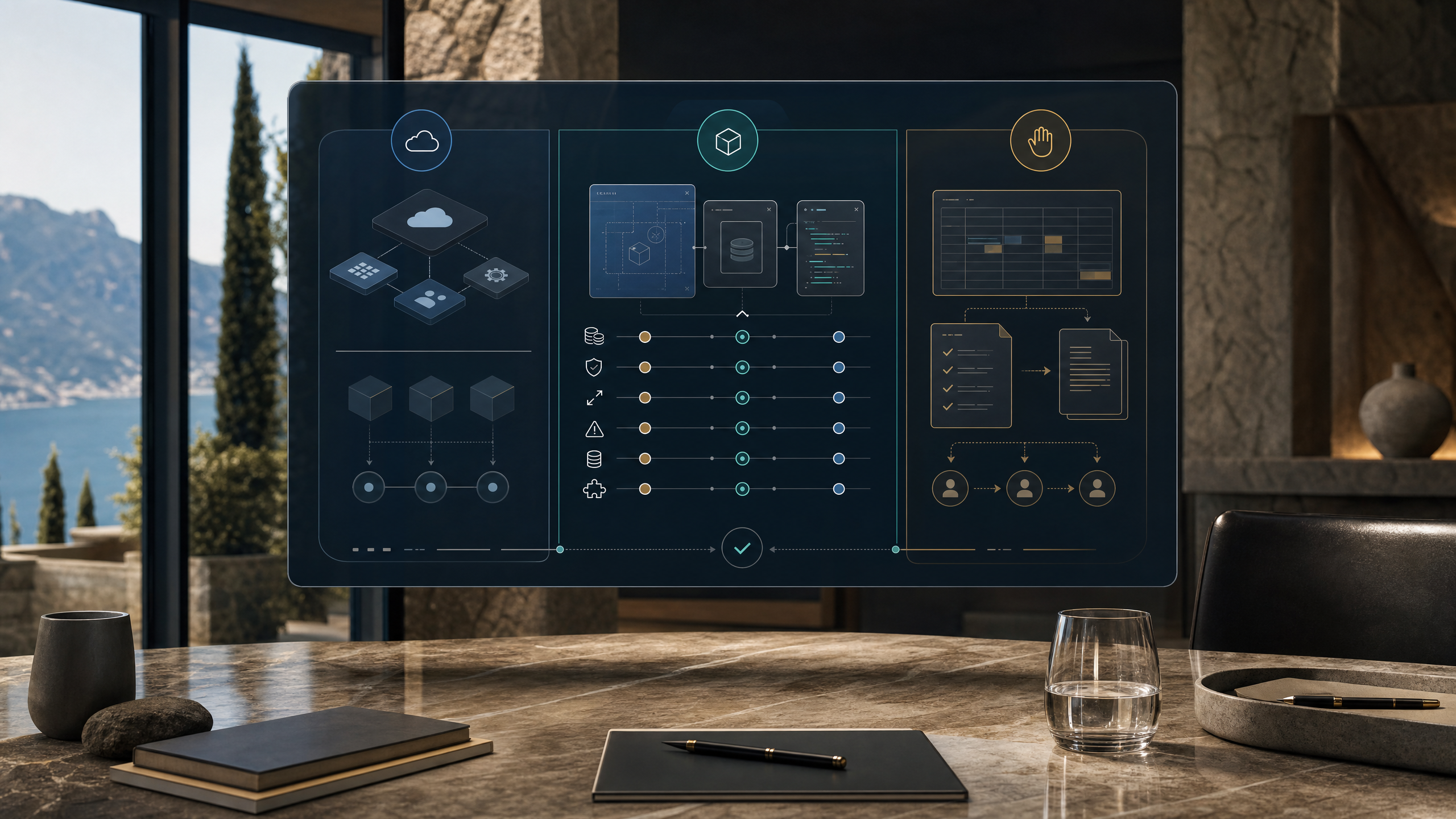
Nowadays, the majority of businesses out there have either switched to digital, or kick-started their new venture online. This is paramount as in this day and age clients can easily access portals and sites with a touch of a button on their various devices. Thus, web development is surely one of the initial steps a business plans for, and if done right, it will assist to push that profit margin and entice new clients.
As of now, there are 1.8 billion websites on the World Wide Web (WWW). So, how will your business stand out and be noted in this competitive digital world, and which is the ideal web development for your company?
Hear us out, we will help you choose the right one, as we go through the three types of web development and the technology behind them.
Different Types of Web Development
Obviously, before choosing which type of web development applies for a particular company, business or brand, it is necessary to familiarise with the different categories and styles on offer.
Let us discuss about the types and their related technologies, as we go through them one by one. This will help you comprehend further as to why it is crucial to on-board the right type of web development, which will play an essential role in building web solutions.
1. Front-End Web Development
Also known as client-side web development, is a procedure of designing the user interface of the website with front-end technologies such as HTML, CSS and JavaScript.
One of the targets in this case is to allow website visitors to read the web content effortlessly. Moreover, to build an interactive interface, the front-end developers/web designers need to adopt and write an efficient and clean code.
Languages used in Front-End Web Development Explained
The most commonly used languages, as aforementioned, remain HTML, CSS and JavaScript.
Here we go through each of them to explain further:
HTML – This is used to design most static pages, but also for highly interactive ones. Web designers use HTML to scheme the structure and arrangement of the website.
CSS – Webpages are also designed with the help of CSS by using HTML code. CSS is widely used by designers and web developers to style websites. For example, the web designer will use a cascading style sheet that will enrich website layout, appearance and visitors` experience.
JavaScript – Whenever there is the need for interactivity on a website, like when searching or clicking on a button to change the page, there is a JavaScript working behind it. This is crucial to upgrade users` engagements, and enables smooth transitions, instead of loading the entire page again.
2. Back-End Web Development
This type of web development focuses mainly on back-end logic, databases, servers and APIs. It is also known as server-side web development, and developers working with back-end write codes and build the logical parts of the entire website.
Therefore, in a web project, the logical part relies on back-end development, and while you may not see it or the technology used around it, however it represents a crucial part of a website.
Languages used in Back-End Development Explained
PHP – This is usually integrated with popular databases like MySQL, PostgreSQL and Oracle. PHP is a commonly recognised language to manage dynamic content, session tracing, databanks and e-Commerce websites.
Java – According to Oracle, Java is used by around 6 million developers, and it is powering 5.5 billion devices. Java is used to construct websites, games, apps and software.
SQL – Its database query language assists to compile vast volumes of data, while it helps to gather information from across databases and utilises it accordingly to your target audience.
Python – It has the ability to create a framework that can be used by any website. It is considered as an easier option to learn and code by developers. Two renowned digital social platforms namely Pinterest and Instagram use or are powered by Python.
.Net – A framework, which by using various languages such as C#, VB.Net, C++ and F#, is utilised for building software applications.
Angular – By using Angular it is easier to develop web applications. It is a type script-based, open-source website development framework.
3. Full-Stack Web Development
It is almost self-explanatory or as it sounds, that Full-Stack web development means the development of both front end and back end. Thus, in this case the developer must have the expertise of web design, development, database and debugging.
The developer must have the knowledge then to develop client and server-side web applications, and should also possess database management skills. Full-Stack web developers are well conversant in redesigning, construct and expedite an entire website project and growth phase.
Furthermore, part of the Full-Stack developers` objectives are to research and recognise web development trends such as Blockchain, deep learning and multi-cloud depending upon the projects.
Tech Stacks used in Full-Stack Web Development Explained
HTML, CSS & JavaScript – These programming languages are used to develop the front end of the web interface, therefore developers must be knowledgeable of Hypertext Markup Language (HTML) and Cascading Style Sheets (CSS).
Git & GitHub – Full-Stack web developers might need to work with version controls like these two.
Browser Dev Tools – Developers need to be comfortable using ChromeDevTools, FirefoxDevTools or any other browser developer tools to edit HTML elements and CSS properties, or track a JavaScript error.
API – Thanks to API, developers can integrate various functionalities without sharing the code.
Programming languages – Depending upon the project, it is paramount for developers to have basic knowledge of programming dialects like PHP and Python.
Factors to consider while choosing which web development language applies
So far we had a deep dive in the different types of web development, and the technology used. As we saw there are various languages used by developers, but which one to choose?
Here we list four factors to consider in tandem with your developer, so that the final decision is fruitful to your business.
1. Performance of the Language
By utilising the language performance benchmark, you will become acquainted with how fast a particular web development language will perform. The outcome might not be precise, but it will give an indication about whether to use a particular language or not.
2. The Deployment Time
The size of the code matters, since when you plot your plan in a web server/live environment, the enhanced and less coded apps will take less time for deployment.
3. Targeted Platform
When planning to develop a program for Linux or Windows platforms, you should opt for Java. This is because by installing a Java Virtual Machine (JVM), your Java program will run on any device.
4. Easier to develop and maintain
Choose languages that are easy to develop and maintain, just like HTML, Python, Java and PHP. Also, most web developers will be more inclined to learn and work with these languages.
Final Thoughts
We have seen the three types of web development, and discussed in detail about the technology used and which languages are best applied.
Confident that this article made you aware of all the options available, so that with this information you can liaise with your developer to build the ideal website for your business.
If you are a sole trader, or a small business, and need support in web development to up your game in the market, feel free to contact us, we would be glad to assist by providing our experts on your project, while you focus on business sales and services.